


.BooyBYol.svg)















2.3x the qualified leads for one of Singapore's largest private institutions.
A menu-driven bot made prospects pick from a list instead of asking what they wanted to know, and most dropped off before reaching an answer. They now ask in their own words — and the admissions team sees roughly twice as many converted leads a month.
16,000 students across 140+ programs, delivered with university partners worldwide. For an institution recruiting at this scale the website is the top of the funnel, and every drop-off is a prospective student who went to ask a competitor instead.
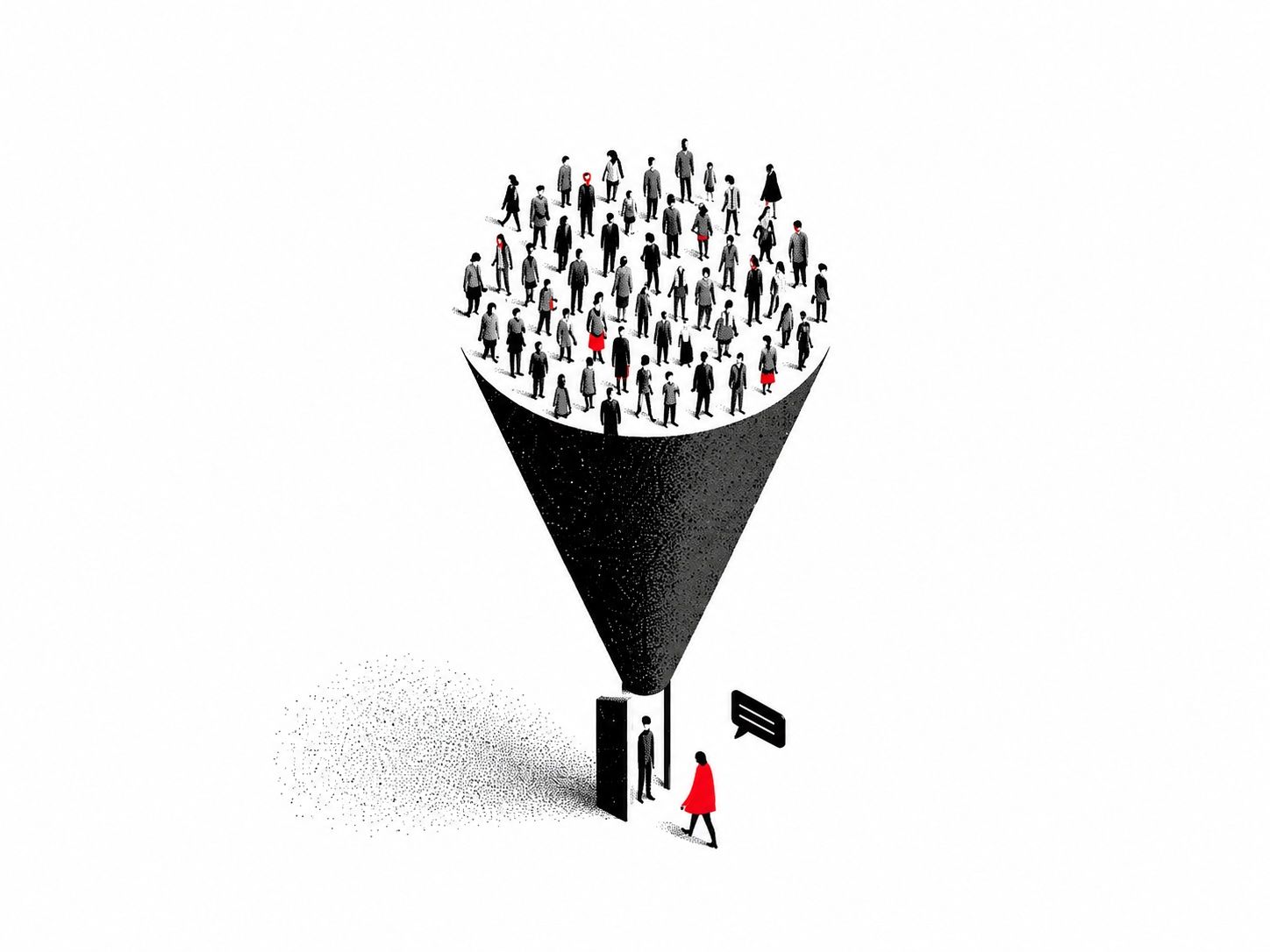
Same traffic, roughly double the qualified pipeline.
The lift came from a wider top of funnel, not a softer bar - from 176 to 411 leads a month, with conversion holding steady.
Leads per month, Einstein Bot (Oct–Nov) vs Agentforce (Jan–Feb), same website traffic.
| Metric | Before | After | Change |
|---|---|---|---|
| Leads per month | 176 | 411 | +134% |
| Converted leads per month | 4 | 8.5 | +113% |
| Lead conversion rate | 2.3% | 2.1% | held steady |
| Human escalation rate | 10% | 6% | −4 pts |
| CSAT score | — | 4.3 / 5 | 150 ratings |
| Avg. session time | — | 9.8 min | new signal |
Conversion held near 2% even as monthly volume more than doubled, so the near-2× rise in converted leads comes from a wider top of funnel, not a softer bar - the added leads converted at the same rate the old, smaller funnel did, so the extra volume kept its quality.
They didn't need a chatbot. They had one - and it generated noise.
The institution already had a website chatbot - a menu-driven Einstein Bot. That was the problem. Prospects had to navigate fixed options instead of simply asking what they wanted to know, so many dropped off before reaching an answer. The leads that did come through were often low quality - incomplete or unqualified - leaving the admissions team to triage rather than advise.
And with answers spread across a large knowledge base and a separate program catalog, the bot was slow to respond, compounding the drop-off. They didn't need a chatbot; they had one. They needed it to actually generate pipeline.
A bot that can't answer plainly quietly caps growth.
For an institution recruiting at this scale, the website is the top of the funnel - the first and often only touch a prospect has before deciding where to inquire. Every drop-off is a prospective student who went to ask a competitor instead; every unqualified lead is advisor time spent triaging rather than converting the ones who are ready. A bot that can't answer plainly isn't a neutral cost - it quietly caps growth at the widest part of the funnel.
We measured first, then rebuilt the flow around what the data showed.
The gains didn't come from a bigger model - they came from measuring first and rebuilding the flow around what the data showed.
- Measured before we optimized. We turned on agent analytics and traced every response from query to answer, and found that ~80% of prospect queries could be answered from the knowledge base alone - the insight that reshaped the whole flow.
- Made the knowledge base the source of truth. Instead of querying knowledge and website in sequence every time, the agent checks knowledge first and only falls back to a live web crawl for program and fee data - cutting redundant calls and sharpening response time.
- Added friction where it pays. A short pre-chat qualification form filters out spam and half-formed inquiries up front, so the leads that reach admissions are real and ready to advise.
- Put the numbers in the business's hands. Every metric is reconciled against agreed definitions and published as native Salesforce reports, so stakeholders track the agent's impact themselves rather than relying on a slide.
An agent that answers, captures, and reports.
Natural-language Q&A across 1,000+ published knowledge articles - prospects ask in plain words and get an answer, not a menu.
A pre-chat form with email validation and consent, writing qualified leads straight into Salesforce with their interests attached.
The agent answers ~80% of queries directly from the knowledge base, with a web-crawl fallback for live program and fee details.
Salesforce-native reports on leads, conversion, escalation and CSAT - so marketing and admissions see impact in their own dashboards.
Three things that decide whether this works.
- Instrument before you optimize. The 80%-answerable finding reshaped the whole design. Without analytics on first, we'd have tuned the wrong things.
- Let prospects ask in their own words. A conversational agent self-qualifies where a menu just filters - the same traffic yields more, and better, leads.
- Friction in the right place raises quality. A short qualification step up front cut junk without shrinking the funnel - volume more than doubled and conversion held.
They own the knowledge and the scoreboard; we built the agent on top.
The institution owned what only it could: the knowledge base content across 1,000+ articles, the live program and fee data, and the definitions behind every metric that mattered. That last part is where most "impact" claims fall apart - so we reconciled every number against definitions the team agreed to, and published them as native Salesforce reports the institution runs itself. They own the knowledge and they own the scoreboard; we built the agent that sits on top.
Your bot is generating noise, not pipeline.
If your website already has a chatbot and it's generating noise instead of qualified pipeline - the fix usually isn't a bigger bot, it's measuring what prospects actually ask and rebuilding the flow around it. Talk to us.
Take this case study with you
Save a clean, print-ready PDF to share internally or send to your team.