























01
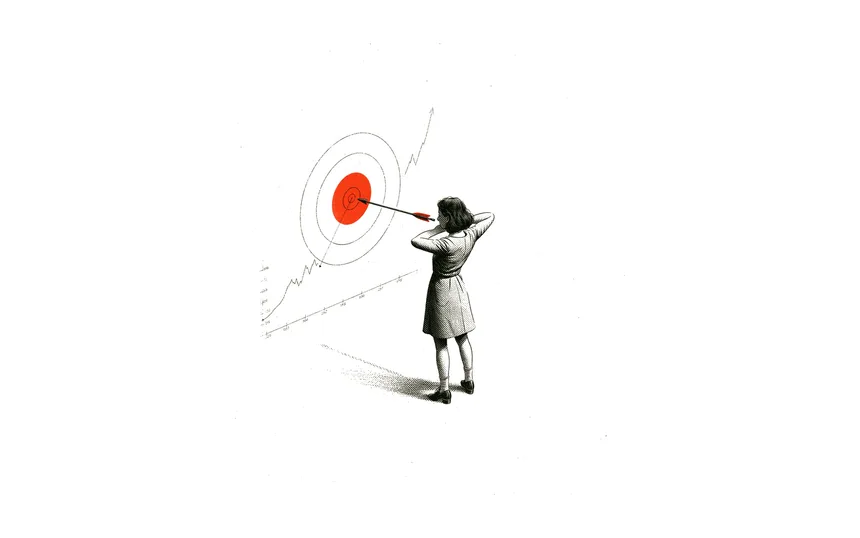
Move a business metric, not an adoption chart.
Licenses bought and dashboards lit describe activity, not outcomes. Before any code, we find the number the customer wants moved. If we don't move it, we haven't done the job.

Our services
We embed senior engineers, put frontier AI behind them, and ship working software in weeks - then prove it with the numbers.
Learn moreRapid AI Transformation
 Accelerated AI-readiness Assessment AI-powered requirements gathering and specification
  Rapid Legacy Migration AI-assisted modernization and migration of legacy systems
  AI-ready Platform Rebuild Move off aging platforms onto a modern stack — agents map the old system, port...
 .BooyBYol.svg) Agentic Native Ops Re-engineer business operations around AI-powered workflows
Agentic Native Ops Re-engineer business operations around AI-powered workflows  AI-powered Pre-Sales AI-augmented demos, proposals, and technical discovery
  Claude Code / Codex ROI Acceleration AI-powered code generation and developer workflow acceleration
  AI-Accelerated Salesforce Implementation Salesforce clouds and Agentforce agents — configured, integrated, and...
  Case study An Australian Securities Exchange link, rewired in seven weeks Two forward-deployed engineers, first commit to the accreditation gate in 47 days. Read the case study
  Demo See realfast in action Bring us the problem that's urgent and expensive. We'll tell you whether we can move it. Book a meeting
 The Exo Platform
ExoCode, ExoWork, and ExoCortex share one secure, compliant foundation - so your engineers, your business teams, and your operators all work from the same source of truth.
Learn moreCore capabilities
 ExoCode Secure, compliant AI development for regulated enterprises.
  ExoWork Enterprise AI app builder for non-technical teams.
  ExoCortex Enterprise context graphs for ops and finance leaders.
  Latest from faster Every AI search tool finds something. They differ on whether it's true. The most dangerous answer an AI search tool can give isn't "I don't know" - it's a fluent description of a company that barely exists. We built a benchmark around exactly that case, and it re-ranked every tool we tested. Read the post
  Demo See realfast in action Bring us the workflow that's stuck. We'll show you the system that moves it. Book a meeting
 Case studies
Real implementations that shipped to production and moved a real metric.
Learn moreLatest
A university's month-end close went from three days to under ten minutes 10 min Higher education A Singaporean public university's full academic year of contracts, in one click 95% Higher education  A 25-year-old financial core, mapped with 80% less of the client's time ~80% Financial services Rewiring a share registry's link to the Australian Securities Exchange, in under seven weeks 47 days Capital markets
 More case studies
 2.3x the qualified leads for one of Singapore's largest private institutions 2.3x Higher education Turning Z47's edge into a system its whole team can use 5 weeks Venture Capital Accelerating a $2.5B US fintech's support queue by 76% 76% Fintech Entering a new market in 10 weeks 3.5x Corporate Services SaaS Scaling sales with AI SDRs 5.8x Recruitment & staffing
  Real-time lead intelligence 30% Real estate Production-ready in 8 days 8 days B2B services
  Newest A university's month-end close went from three days to under ten minutes Our client, the incubation arm of a leading Singaporean public university, reconciled revenue, expenses, and budget for teams spread across the world. The reconciliation and verification took about three days each month. Read the case study
  Demo See realfast in action Bring us the problem that's urgent and expensive. We'll tell you whether we can move it. Book a meeting
 while the agents do the grunt work.
Sidu Ponnappa Aakash Dharmadhikari Steven Sule Rishi Ayyer Vinay Mimani Nikhil Mannikar Saurav Shah Ankit Pandey Manas Vaze Rajnish Dashora Prashant Mittal Jewel James Paulomi Gudka Akhil Chandran Megha BC Divya Gurunathan Srini Satyan Jeetal Shah Allison Wright Sumanth Raj Urs Aniket Hendre Aravind Karthik Anitha Thammineni Rajat Goyal Mohit Agarwal Piyush Sinha Nayan Jain Jigish Chawda Shishir Joshi Suraj Chandola Priyanshu Gaur Harsh Jain Animesh Das Asarar Ahmed Rishabh Garg Arul Praveen T Nameet Rajore Saran Kumar Isaac Sanctis Rohit T Saurabh Kamboj Shashwat Gupta Noel Mathew Harshit Agarwal Ashlesh Shenoy Omkar Narayankar Vaidehi Joshi Aviral Srivastava Saurabh Nandedkar
Four or five exceptional people with agent leverage out-ship teams several times their size.

Engineers, designers, and product managers, each running fleets of agents. Agents give the work superhuman throughput; senior humans hold the quality bar.
We've done it on enough engagements that it stopped being a claim and became the operating model. We hire slowly and pay at the top of the market, because one wrong hire, magnified by agents, can undo the work of all.
First the agents map how your work actually flows. Then we build software levers on the systems you already run. Nothing gets ripped out. Everything gets faster.
We want our customers pulling off moves their competitors call impossible, again and again and again.
Read Sidu's thesisA first-person note on choosing realfast, from the person behind our recruitment and branding. Experience the pitch as a fully working Windows 95 desktop.
Read the note"People call us when the deadline is impossible and the board is watching."
From our superagile manifesto, the way an AI-native firm actually ships.
Licenses bought and dashboards lit describe activity, not outcomes. Before any code, we find the number the customer wants moved. If we don't move it, we haven't done the job.
AI compounds whatever process you point it at. Redesign first and it gets dramatically faster. Skip it and you just run the old bottlenecks at higher speed.

Agents write a lot of what ships. A person signs off on all of it: in the work, in the docs, in the audit trail. It's the only honest way to run this.

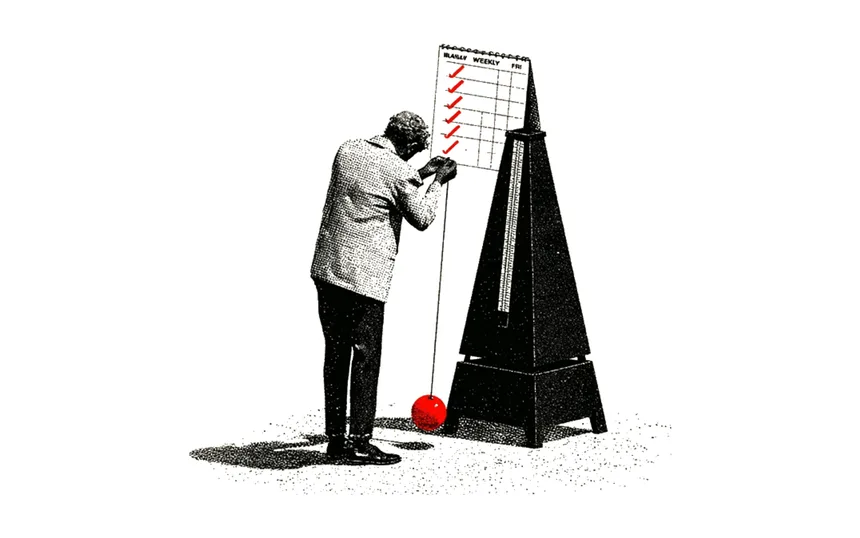
Something usable ships every week. By Friday the customer can use what we built; Monday's improvement is already scoped.
It's reducing ambiguity faster than the next person. The bar has three parts, and the last one is what separates people.
The thesis updates every three months. We hire people who make good calls on incomplete data and update as new evidence arrives.
Not autocomplete. Directing a model through a real piece of work end to end, prompts, evals, review loops, to a quality bar.
Prose is the visible surface of how you think. The agents amplify whatever you hand them. Muddy writing, muddy work.
Think you clear the bar?
If that's the work you want, not the story of it, we'd like to hear from you.